

Complicated grief vs normal grief: how do you know when to get help?
Grief does not follow a schedule. Most people who have lost someone know this in theory and then find themselves surprised, months or years later, that they are not further along than they are. That the loss still hits without warning. That certain days are still impossible. That the person is still gone in ways that keep catching them off guard.

Suicide bereavement statistics in Canada: what the research tells us
I put this together because I know what it is to search for something, any research, any evidence that what you are experiencing has a name, in the aftermath of a suicide loss. The statistics here represent real people and the families they left behind.

The pursue-withdraw pattern: why the same argument keeps happening
You have had this argument before. The same shape, the same ending, the same feeling of having gotten nowhere despite both of you trying.
One of you brings something up. The other goes quiet, or gets defensive, or leaves the room. The first person pushes harder, needing something to land, needing some acknowledgment that this matters. The other person pulls back further. By the end you are both alone in a relationship that is supposed to feel like connection, and neither of you entirely understands how you got there again.

Over-functioning and under-functioning in relationships: how the dynamic forms
I first came across this concept in Brené Brown's book Rising Strong. She tells a story about the day her mother collapsed and was rushed to hospital. Brené arrived in the emergency room already operating at full capacity: she had a list, she was directing people, she was managing everything she could manage. Her sister Ashley looked at her quietly and said, "You're over-functioning, Brené." Her other sister Barrett said, "We can help. We know how to do this."

What is over-functioning? Signs you're carrying more than your share
There is a word for the particular exhaustion of being the person who holds everything together.
Most people who live with it don't know the word. They just know the feeling: the sense of moving through the world with too much weight, managing too many things, anticipating too many needs, and finding, somewhere underneath the competence, a tiredness that sleep doesn't fix.

How long does grief last? What therapists actually say (vs. what you've been told)
You have probably heard some version of the following: grief takes about a year. Or that it comes in five stages. Or that time heals all wounds, and that if you are still struggling after a certain point, something has gone wrong with you.

What to say (and not say) to someone grieving a suicide loss
Most people who say the wrong thing after a suicide loss are not unkind. They are scared. They do not know what to do with a grief this particular and they are terrified of making it worse, so they reach for the nearest thing that sounds like comfort.

Grief therapy for high-functioning adults in Ontario
There is a particular kind of person who comes to therapy and apologizes on the way in.
They are not sure they have a good enough reason to be there. They are managing. They are getting things done. From the outside, nothing looks broken. They are the person other people lean on, the one who holds it together, the one who holds it together even in the middle of their own grief, still fielding everyone else's.

Grief after suicide: what makes it different from other bereavement
I have lost people in a lot of different ways. I know what it is to sit at a bedside. I know what it is to get a phone call that rearranges everything. I know grief that comes with a long warning and grief that arrives without one.
And I know what it is to lose someone to suicide. Three times.

I was taught not to cry
I help women who hold everyone else return to themselves.
This is the moment I learned to be held.
I was taught not to cry.

Motherhood Broke me
Motherhood broke me, but not all at once. It happened in the silence and the self-sacrifice, until grief finally asked to be named. When I let myself mourn what was lost, peace returned and joy cracked free. The journey is no longer self-sacrifice. It is self-honouring.

I Thought I Knew Grief
I lost 3 family members to suicide.
And so many loved ones.
I thought I knew grief.
But I didn’t.



Chasing Rainbows
Ten years ago, on a mountain top in Ireland I saw the most incredible rainbow.
And for the last 10 years, I’ve been unknowingly chasing them.
I came down off that mountain top and learned the language of healing, of self awareness.
Let me fall if I must fall. The one I become will catch me.
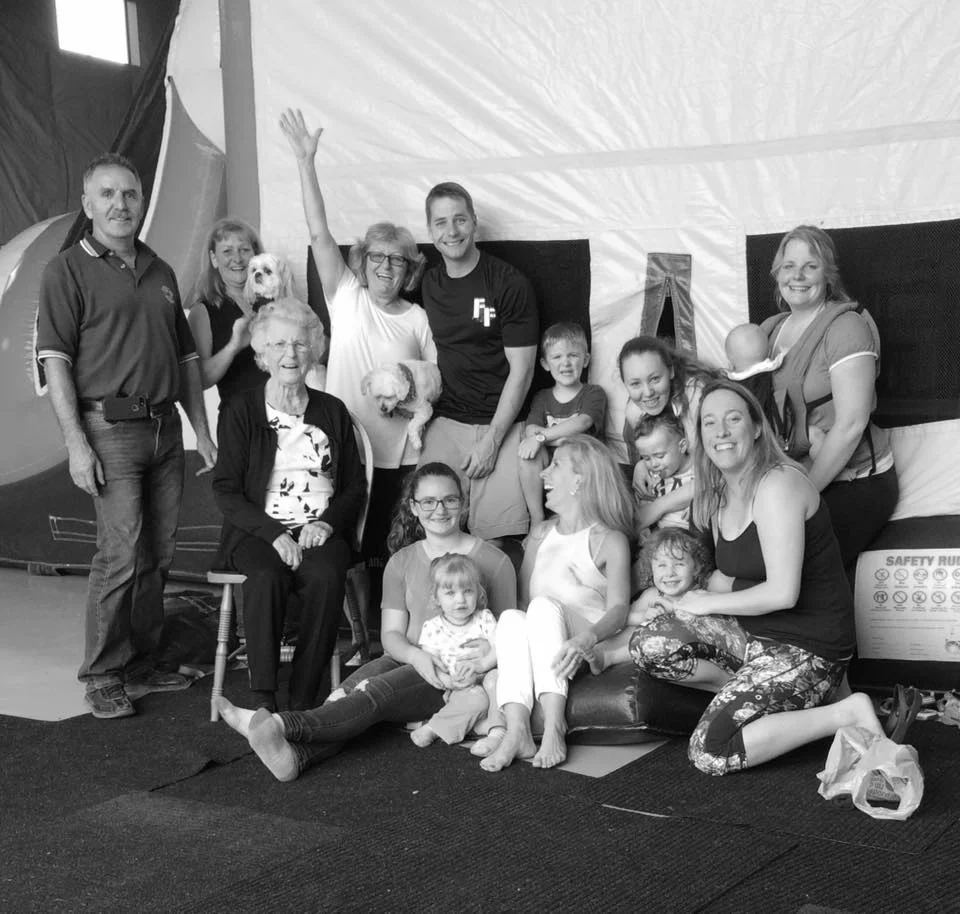
Do you see what I see?
I spy a family - people that love each other and got together to play and have fun. Yes – that’s a bouncy castle behind them and in a helicopter hanger of all places.